
Multi-effects
They combine several effects, amp simulations, presets, and sometimes a looper, a drum machine, a headphone output, or a USB interface. It's an all-in-one solution.
Comparison
Multi-effects or separate pedals? This is one of the big questions when you start building your guitar sound. Multi-effects offer many possibilities in one device, while separate pedals allow you to create a more personalized pedalboard, effect by effect.
A guitarist who wants to explore several sounds quickly faces two choices: buy a complete multi-effects unit, or gradually build a pedalboard with separate pedals. Both solutions are good, but they don't meet the same needs.
Multi-effects are often simpler, more economical, and more practical for discovering many sounds quickly. Separate pedals are more scalable, easier to adjust, and allow you to choose each effect according to its character.
Choose a multi-effects unit if you want many sounds, presets, a compact and practical solution. Choose separate pedals if you want to build your sound piece by piece, with more personality and control over each effect.
They combine several effects, amp simulations, presets, and sometimes a looper, a drum machine, a headphone output, or a USB interface. It's an all-in-one solution.
Each pedal has a precise function: overdrive, compression, delay, reverb, chorus, fuzz, tuner… You build your sound gradually, with effects chosen one by one.
A multi-effects unit often gives many more sounds for a contained budget. Separate pedals become more expensive as the pedalboard grows, but they allow for more precise selection.
At home, in rehearsal, on stage, or in a home studio, the right choice changes. Multi-effects are very practical for centralizing everything. Separate pedals shine when you know exactly what you want.
| Solution | Strengths | Limitations | Ideal for |
|---|---|---|---|
| Accessible Multi-effects | Many sounds, presets, effects, looper, practical | Less personalized than a complete pedalboard | Beginner, home, rehearsal, exploring effects |
| Advanced Multi-effects | Amp simulations, pro outputs, MIDI, USB, complex presets | Requires more time to master settings | Stage, home studio, experienced guitarist, cover band |
| Separate Pedals | More personalized sound, direct adjustments, unique character for each pedal | Higher budget, cables, power supply, pedalboard | Guitarist who wants to build their sound step by step |
| Hybrid Pedalboard | Multi-effects + a few favorite pedals | Requires good signal organization | Player who wants practicality and sonic personality |
Here are five products that represent the two possible paths well: two multi-effects for centralizing sounds, and three separate pedals for building a more personalized pedalboard.
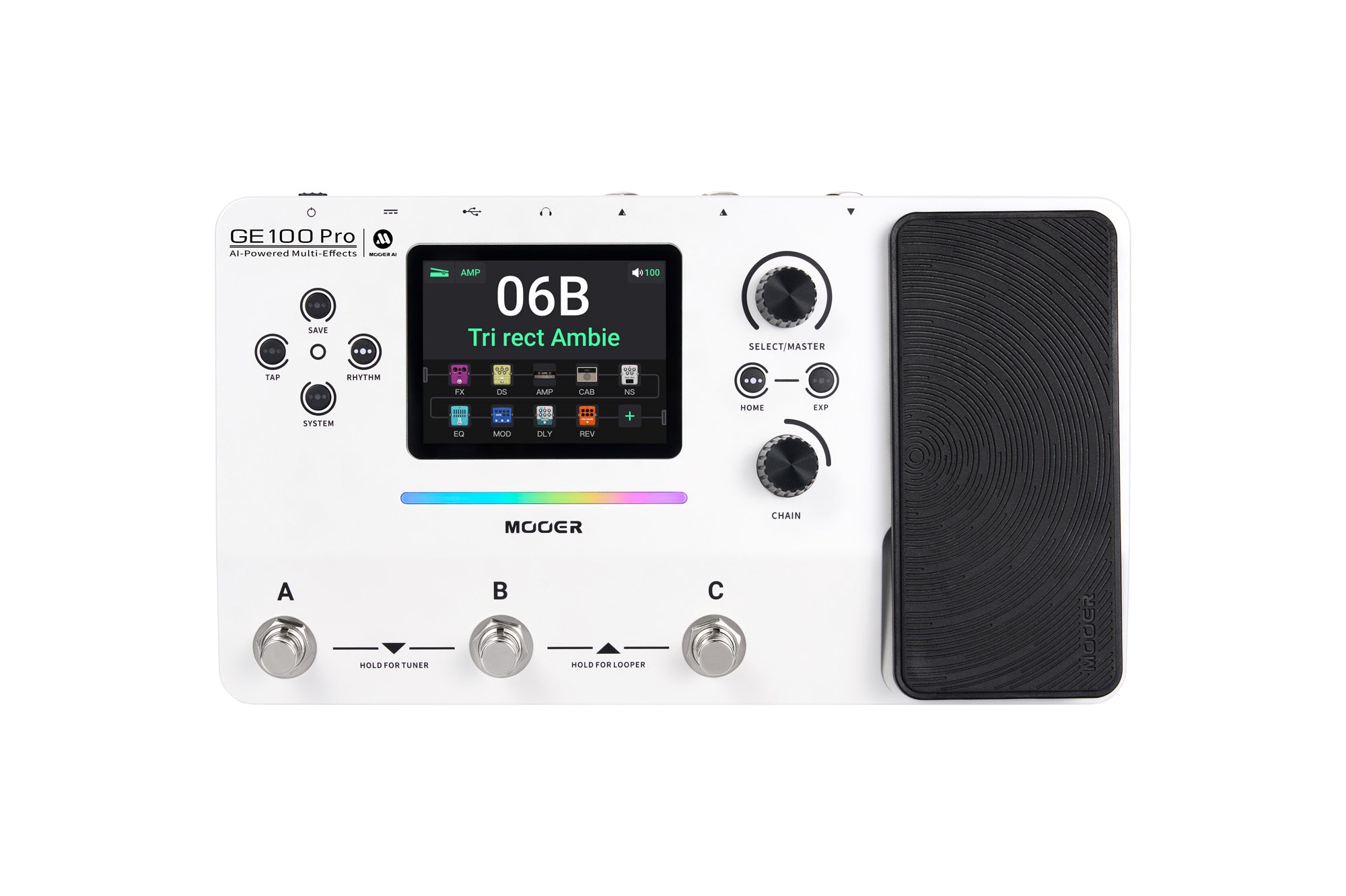 Accessible Multi-effects
A compact and very practical multi-effects unit for discovering many sounds without buying several separate pedals. It is well suited for home use, lessons, rehearsal, and home studios.
 Advanced Multi-effects
A more complete pedalboard for the guitarist who wants a true control center: stage, studio, advanced presets, simulations, pro outputs, and a wide sonic palette.
 Dedicated Overdrive
An overdrive pedal with real personality. It perfectly illustrates the advantage of separate pedals: a precise, immediate effect, with its own character and direct adjustments.
 Dynamics
A useful pedal for controlling dynamics, smoothing playing, improving clean sounds, arpeggios, funk or country rhythms, or leads.
 Delay & reverb
An ambient pedal that combines delay and reverb. It perfectly represents the advantage of a dedicated separate pedal: an inspiring, direct, and very musical effect.
Multi-effects are often the most logical choice when you want to discover several sounds quickly. Instead of buying an overdrive, a reverb, a delay, a chorus, a tuner, and a separate power supply, you get a single device capable of covering many needs.
This is particularly interesting for beginners, guitarists who play at home, students, cover bands, or musicians who want to record easily without accumulating too much equipment.
You want a compact, versatile solution, with many sounds, presets, a looper, a headphone output or USB, and a budget that is often easier to manage than a complete pedalboard.
Separate pedals allow you to build a more personal sound. Each effect is chosen for its character: a precise overdrive, a particular compressor, an inspiring delay, a more musical reverb, or a specific modulation.
This approach is often more scalable. You start with an important pedal, then gradually add the effects you really need. It's also a highly appreciated solution on stage, as the settings are direct and visible.
You already know which effects you like, you want a more personalized sound, and you prefer to adjust each pedal directly rather than navigating through menus or presets.
Multi-effects are often more economical initially. A single device provides access to many effects, simulations, and presets. This is ideal for testing several sounds before knowing what you really prefer.
A pedalboard with separate pedals can be more expensive, as you have to add up the pedals, power supply, patch cables, the pedalboard itself, and sometimes a tuner. But this approach also allows you to gradually build a more durable and personal setup.
| Configuration | Budget | Main advantage | To consider |
|---|---|---|---|
| Accessible Multi-effects | More contained | Many sounds immediately | Learning time for menus and presets |
| Advanced Multi-effects | Higher, but very complete | Complete stage / studio / rehearsal solution | More advanced settings, preset organization |
| Simple Pedalboard | Progressive | Personalized sound effect by effect | Power supply, cables, pedal order |
| Complete Pedalboard | More significant | Direct control and strong sonic identity | Transport, weight, maintenance, cabling |
At home, a multi-effects unit is very practical because it allows you to play with headphones, use a drum machine, a looper, or a USB connection depending on the model. It also avoids accumulating too much equipment.
In rehearsal or on stage, both solutions can work. An advanced multi-effects unit like the Mooer GE300 can become the complete sound center. A pedalboard with a few well-chosen pedals can also be very effective, especially if you already use an amp you like.
Many guitarists end up with a hybrid solution: a multi-effects unit for practical sounds, simulations, and presets, then a few separate pedals for the effects they absolutely want to keep.
| Profile | Recommended choice | Why? |
|---|---|---|
| Beginner | Mooer GE100 Pro | Allows you to discover many sounds without buying several pedals. |
| Home / Headphone / Home studio guitarist | Multi-effects | More practical for playing, recording, using presets, and accompanying tracks. |
| Experienced guitarist | Mooer GE300 or separate pedals | The choice depends on the need: centralize everything or build a very personal sound. |
| Organic sound enthusiast | Separate pedals | Dedicated overdrive, compression, delay, or reverb give a more distinct identity. |
| Cover band / Stage | Advanced Multi-effects | Presets allow for quick sound changes depending on the songs. |
Here are simple answers to questions guitarists often ask before making a choice.
For beginners, multi-effects are often the most logical choice. The Mooer GE100 Pro allows you to discover many effects, sounds, and presets without immediately building a pedalboard.
View Mooer GE100 ProThe Mooer GE300 is more suitable if you want a true control center with amp simulations, numerous effects, Jack/XLR outputs, USB, and advanced functions.
View Mooer GE300An overdrive is often a very good first choice. The DOD BadderMonkey allows you to work on tone, crunch, saturation, and interaction with the amp.
View DOD BadderMonkeyA pedal like the Keeley Compressor Plus helps to control dynamics, improve sustain, and make certain clean or rhythmic sounds more consistent.
View Keeley Compressor PlusNot essential for beginners, but very useful for adding space to the sound. The Keeley Caverns V2 combines delay and reverb in a single dedicated pedal.
View Keeley Caverns V2Yes. It's even a very common solution: using a multi-effects unit for practical sounds and adding one or two separate pedals for the effects you really want to personalize.
If you are a beginner or want to explore many sounds quickly, the Mooer GE100 Pro is the simplest choice. If you are looking for a more advanced solution for stage, rehearsal, or home studio, the Mooer GE300 is much more comprehensive.
If you prefer to build your sound gradually, start with a good overdrive pedal like the DOD BadderMonkey, then add a useful pedal for dynamics like the Keeley Compressor Plus, and an ambient pedal like the Keeley Caverns V2 for delay and reverb.
To complete your choice, you can also consult our other guides on electric guitars, amplifiers, and playing at home.
Find our selection of multi-effects, overdrives, compressors, delays, and reverbs to build the sound that matches your playing.
Guides & advice
 Comparison chart
The EFNOTE 3 Style A, Style B, and 3X share a common sound and technological foundation, but their cymbal configurations, size, and playing capabilities are not exactly suited to the same needs.
Read the guide Tip →
Tip →
Choosing a guitar amp for playing at home isn’t just about looking at the wattage.
Read the guide Guide →
Compare Dreadnought, Auditorium, and Jumbo models from under €300 to €900.
Read the guide Guide →
Our recommendations under €300, from €300 to €800, and from €800 to €1,200.
Read the guide Comparison →
Strat, Telecaster, single-cut, double-cut, modern… Electric guitar shapes are not just a matter of aesthetics. They affect comfort, tone, attack, sustain, and the musical styles for which the instrument will feel most natural.
Read the guide